From West Wing Staff to White House Etiquette Instructor
By Alison Cheperdak

Things are looking different at the White House lately. At least for me.
For one, I’m not an employee.
I no longer race out to West Exec to make sure I am in the car before the motorcade pulls away. I do not fly on Air Force One. I don’t wear a hard pin that allows me to approach the president without permission.
But those years prepared me extraordinarily well for what I am doing now.
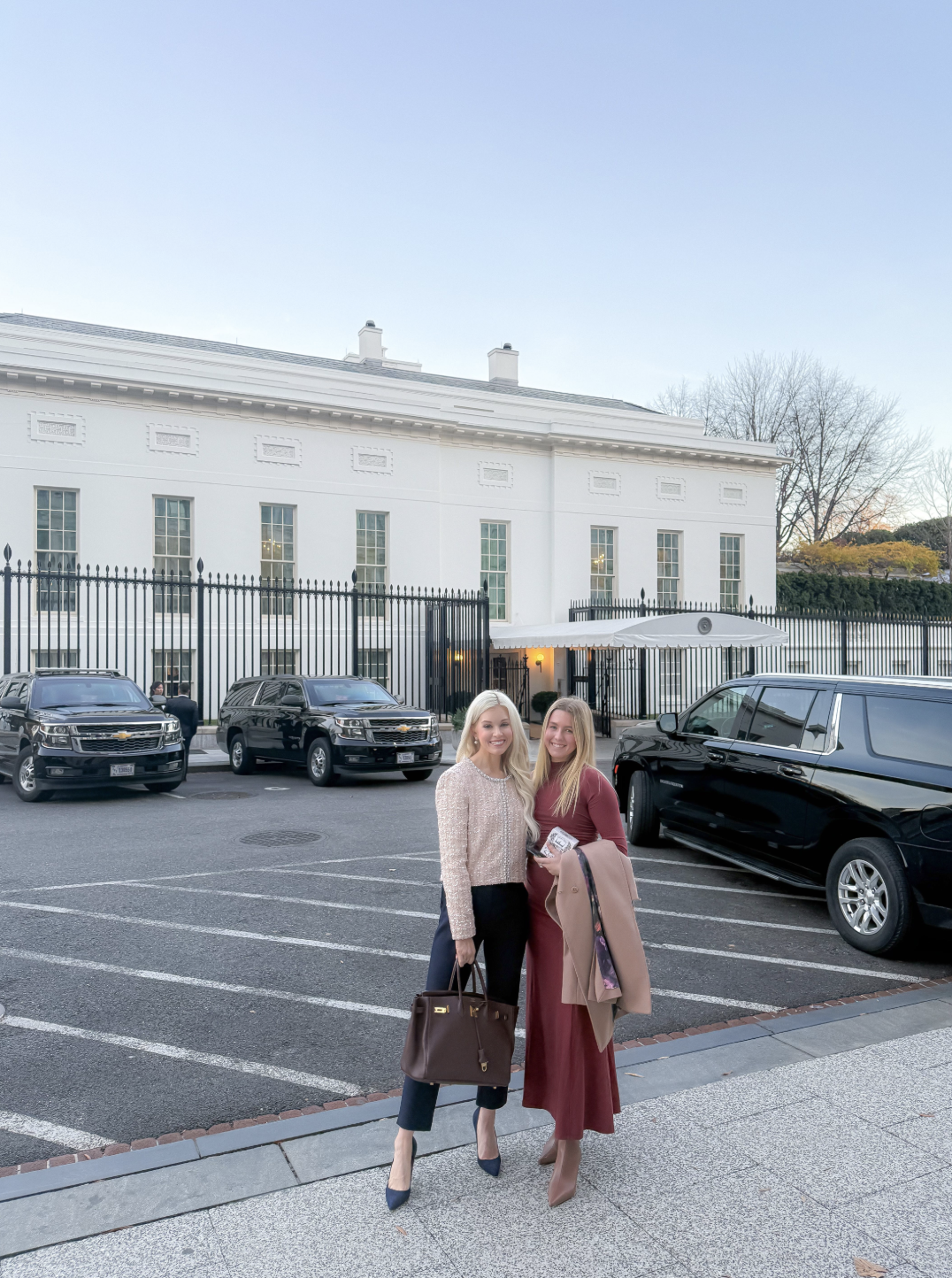
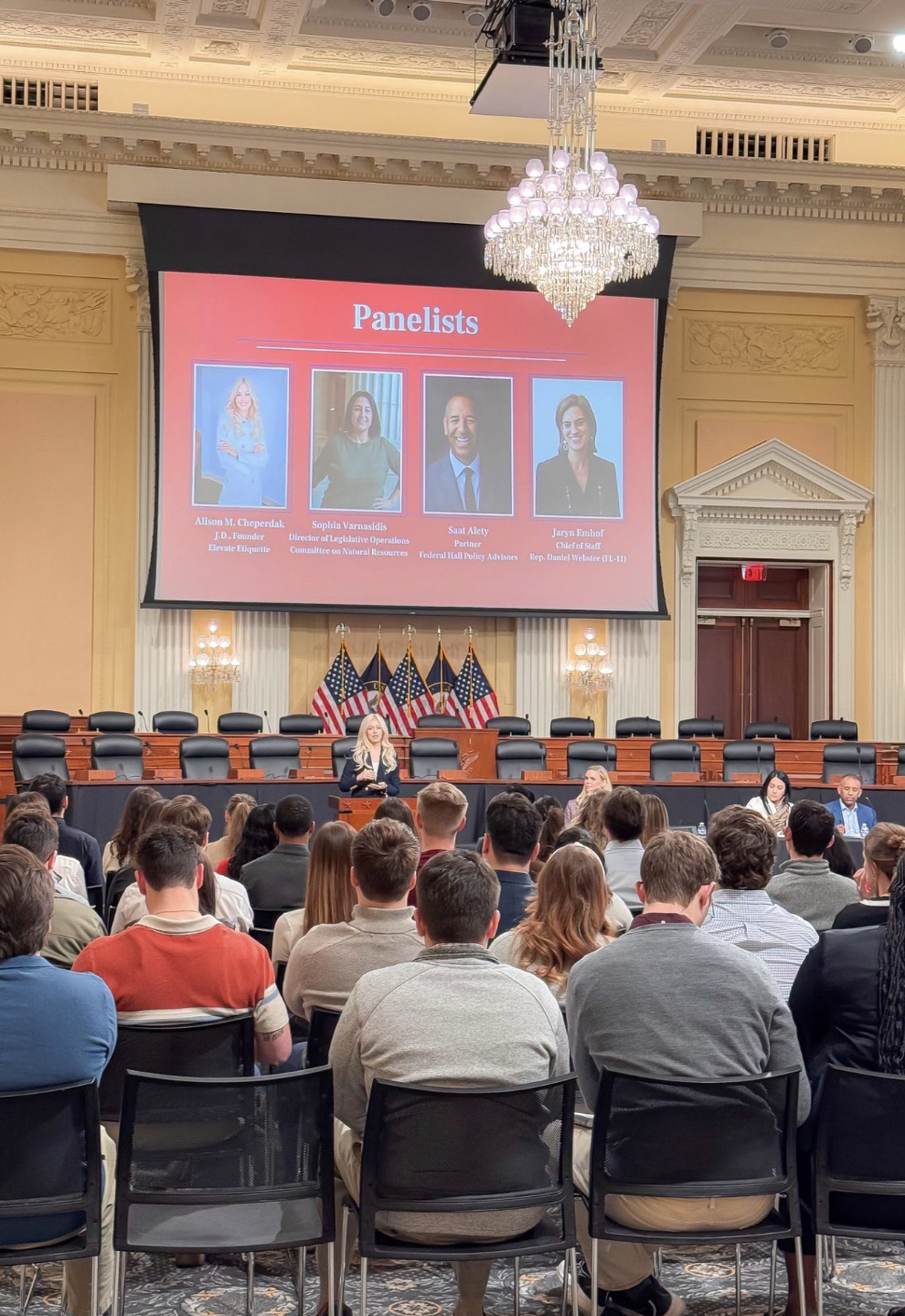
Today, I return to the White House not as a staffer, but as an instructor, teaching business etiquette, professional communication, and executive presence to White House interns. I have taught seminars at Harvard Law School, the US Congress, and for leadership teams at some of the largest multinational companies in the world. And this spring, I am publishing my first book with HarperCollins Christian, Was It Something I Said? Everyday Etiquette to Avoid Awkward Moments in Relationships, Work, & Life.
Before the White House, I worked as a TV news reporter and anchor. In law school, I clerked on three Senate Committees, the House Committee on Ways and Means, and for the Chairman of the Federal Communications Commission. I later worked as an attorney in a large corporate law firm and in the General Counsel’s Office at the US Treasury. Those roles sharpened my writing, strengthened my judgment, and gave me a front-row seat to how institutions operate and how reputations are formed.
Then came the West Wing during the first Trump administration.
My time there fundamentally changed my definition of an emergency. When you work in an environment shaped by national security briefings and global headlines, your internal calibration shifts. Since those White House days, I can’t honestly say that I have experienced a real emergency. Perspective is a powerful gift.
I remember once hastily stuffing old speech drafts into the nearest vase I could find as the president was walking toward the Diplomatic Reception Room to deliver remarks. I handed him the final version he needed and tried to look composed, hoping no one would notice the decorative arrangement concealing my panic. The stakes were real. Composure was expected.
The White House sharpens you. It demands discretion. It teaches you that tone, timing, and judgment matter as much as credentials.
After the White House, I clerked for a federal judge and later served as director of development and then executive director of a national nonprofit I care deeply about. Those years grounded me. They reminded me that leadership is not only about proximity to power, but about stewardship and responsibility.
After working in the White House, people go on to do any number of things. For me, the pivot was unexpected. I took a turn into entrepreneurship.
What began as a personal fascination in 2012, when my now husband Jason and I became engaged — long before my West Wing days — slowly evolved into something much larger. As we prepared for marriage, I became absorbed in the rituals, expectations, and unspoken rules that shape meaningful moments. I got my first etiquette book hoping to answer the many wedding etiquette questions I had at the time, and things escalated quickly. I began reading and studying independently everything I could find about etiquette, protocol, emotional intelligence, and executive presence. It started as personal passion and professional development. And I continued studying as I worked in those varied roles across media, law, and government.
I saw how much etiquette can help you in work and in life — and how the absence of it can quietly hurt you.
Washington is largely a relationship-oriented town. Reputations travel quickly. Doors open and close based not only on talent, but on trust and judgment. I wanted to help more people navigate that reality.
Eventually, I enrolled in certification programs through The English Manner and Beaumont Etiquette to teach North American and British etiquette. I initially did so for my own growth. But as I learned alongside others with thriving etiquette businesses, I saw proof of concept and resonance with a loyal and growing audience around the world who were hungry for practical, modern guidance. Rather than rigidity or superiority, I wanted to bring warmth, clarity, and zero mean girl energy to the space. So I began sharing on social media first.
Within months, I was reaching millions across social media platforms. While I had once held an outward-facing role as a television journalist, content creation today is entirely different. It is constant, interactive, and deeply personal. I now speak daily to a community from across the country and around the world. That visibility is part of why I have rarely spoken publicly about my time in the White House.
Nothing I teach is partisan. Kindness, integrity, honesty, and decorum are not red or blue.
They are human. In an era when online conversation can flatten nuance, I did not want my professional background to become a filter through which everything I share is interpreted.
But the truth is that my time in government deeply informs how I teach etiquette. Not because of politics, but because of pressure. I saw firsthand how leaders are evaluated in seconds. I observed how interns could either elevate a room or shrink in it. I learned that emotional intelligence often distinguishes those who advance from those who merely attend.
When I stand in front of White House interns today, I am not teaching abstract theory. I am teaching from lived experience. We discuss business etiquette, professional communication, and executive presence in environments where every interaction matters. We talk about introductions, discretion, dining in official settings, and how to recover from mistakes without unraveling.
What I teach there is what I teach everywhere. And much of it now lives inside my book.
Was It Something I Said? is not a tell-all. It does not reveal state secrets or throw anyone under the bus. It blends narrative with practical guidance. It includes stories from my time in government, in law, in media, and in ordinary life. It covers everything from decoding dress codes to navigating salary conversations to responding to that group text — you know the one — the notification that makes your stomach drop.
It is an etiquette guide for your real, at times messy, but still fabulous life.
Writing a book and publishing with a traditional publishing house takes years. At the beginning of this journey, I was not sure whether I would share at all about my White House experience or political background. I wanted the message to stand on its own.
But as the book has taken shape, I have realized that leaving out that chapter would leave out context.
The West Wing was not separate from my work in etiquette. It was preparation for it.
And now, the timing feels right to say so.
Use your words carefully.
Carry yourself with composure.
Make people feel respected, not small.
Titles change. Administrations change. But those principles endure.
Alison M. Cheperdak, J.D., is the founder of Elevate Etiquette, a consultancy where she teaches modern manners in a gracious and grounded way. She is the author of Was It Something I Said? Everyday Etiquette to Avoid Awkward Moments in Relationships, Work, and Life.
Photos courtesy of @elevateetiquette