Independent Women’s Powerful Recipe: Tell Her Story, Change the World
By The Conservateur
Today, politicians of all persuasions are competing to prove that they can improve the lives of average Americans. “Affordability” is the magical buzz word, although its most vocal bearers hope voters have amnesia about what progressive policies made it a problem. Many in Washington, D.C. have proposed quick fixes to quality-of-life concerns that sound promising but ultimately aren’t effective, sustainable, or dignifying to the citizen. Independent Women, a 30+ year old titan of policy innovation, dares to dig deeper and advocate for smart measures that unleash real prosperity and long-term well being. A formidable enterprise of full-service policy development, Independent Women has done the painstaking research, storytelling, and problem-solving necessary to empower women and all Americans not just for now, but long into the future.
A Full-Service Policy Powerhouse
Independent Women is a rare, all-inclusive shop for driving policy forward, with a pipeline of work that stretches from research, to communications, to state affairs, to government affairs, to grassroots mobilization, and beyond. Among the many think tanks and advocacy organizations in the freedom movement, Independent Women is unique in its sprawling apparatus, which other nonprofits have come to rely on for support.
On any particular policy question, Independent Women’s well-oiled machine has all the bases covered: identify the problem, develop a smart solution, cultivate real stories, turn their storytellers into ambassadors in the media, mobilize the grassroots, engage legislators, deploy experts to testify, until, finally, the law is passed. It’s a powerful recipe that has a track record of success on several major policy fronts, from protecting women’s spaces to independent contracting.
To focus its work, Independent Women’s policy centers have helped them divide and conquer the mission into policy wheelhouses on the economy, energy, education, safety, and law. The plan is to expand each of the centers’ presence in 2026.
Independent Women is also special in its ability to execute in the states, where they are encouraging state legislators to adopt model legislation they’ve drafted on some of these policy areas.
“A real focus has been changing the conversation and making sure that the people recognize that all issues are women’s issues and what a big tent there is for women in the broad conservative movement,” Carrie Lukas, president of Independent Women, told The Conservateur.
“Over the last couple years, it’s been really exciting to see how much change you can make on a state level and the capacity to create good ideas and proposals and watch them become law and take force.”
Warriors for Flexibility and Bigger Paychecks
Since affordability looms so large as an issue today, Independent Women believes that lawmakers should enact policy that makes it easier to work—including in its entrepreneurial and less structured forms. In 2025, Independent Women unveiled model legislation to modernize labor policy for America’s 74+ million freelancers. Major beneficiaries will be women, who make up half of all independent contractors. A part-time gig gives many women the invaluable flexibility they desire to pursue motherhood or other vocations simultaneously.
“Worker freedom issues have been a core focus for us for obvious reasons,” Lukas said.
According to Independent Women, the game-changing element for independent contracting reform is portable benefits. Independent Women’s Center for Economic Opportunity, directed by Patrice Onwuka, has kept up a consistent drumbeat of insight on free labor, economic mobility, and tech innovation.
According to Onwuka, “We are recognized as warriors for flexibility. The ability to work for yourself around priorities such as raising kids or caring for aging parents is an important women’s issue.”
Under Independent Women’s model legislation, called the “Voluntary Portable Benefits Act,” independent workers would be empowered to obtain voluntary benefits—such as health, disability, and retirement coverage—without being forced into traditional 9-5 employment or losing their independent status. Implementing the legislation would undo the current state standard which prohibits companies from offering benefits to independent workers.
For the states, Independent Women provides the legislative blueprint that lawmakers can apply when crafting their bills. Following Independent Women’s cue, two states passed portable benefits last year with nearly unanimous bi-partisan support, according to Jordanne Kemper, vice president of Independent Women’s Voice. And Independent Women’s state affairs apparatus is just kicking their model into high gear. In the first month of 2026, they’ve already fueled introductions in seven states, including powerful backing by West Virginia Governor Patrick Morrisey, who not only announced portable benefits in his 2026 legislative priorities, but was the first governor to include it in a State of the State address.
As Onwuka predicted to The Conservateur, “2026 will be a big year for portable benefits.”
Independent Women faces an uphill battle in some states, such as Wisconsin, where the Portable Benefits Act passed the state legislature but was vetoed by the progressive governor, who has generally opposed right-to-work. That’s why Independent Women’s compelling storytelling– facilitated by its newest division, Independent Women’s Features (IW Features), the grassroots storytelling and original journalism arm of Independent Women, is so important when it comes to moving the needle.
“One of our strongest tools is storytelling; it underpins all that we do,” Onwuka told The Conservateur. “Through IW Features, we show how good policies help real people—and how bad, but well-intended government programs and policies often backfire on the people they are meant to help, such as lending industry regulations.”
Independent Women was a major proponent of extending the 2017 tax cuts that delivered real wage growth, higher household income, and millions of added jobs to the economy. “On taxes, we’ll be trumpeting the benefits of the Working Families Tax Cut, pushing for states to eliminate their state income taxes, and looking for more federal tax reforms that will make a difference in housing and retirement,” said Onwuka. Beyond the national level, Onwuka and her center have urged states willing to hear common-sense arguments, such as Georgia where she testified in November, to eliminate their state income taxes and in Missouri where Independent Women’s Network—their grassroots arm of 250,000+ members across the nation—is activating to help HJR 165 advance, which proposes a constitutional amendment to be brought before Missouri voters to move toward eliminating the state income tax.
Advancing Energy Abundance
On energy and environmental policy, Independent Women wants states to consider a new approach—one that prioritizes energy affordability and abundance without alienating women (who appreciate environmentally conscious policies). For Independent Women’s Center for Energy and Conservation, the key word is “abundance.” The center’s approach is one with broad appeal: advance policy to increase production but don’t bash renewables. With more energy production comes falling prices. It’s a simple function of supply and demand.
“Our goal is to advance conservation solutions for energy and natural resources challenges. We demonstrate how energy abundance policies lower electricity bills, gas prices and related energy costs,” Gabriella Hoffman, director of Independent Women’s Center for Energy and Conservation, told The Conservateur.
And Independent Women knows women are a key majority needed to advance an energy abundance agenda. In keeping with their data-backed approach, polling released by Independent Women underscores why women are central to this effort. In New England—a region hit incredibly hard by green energy mandates that have caused energy costs to soar—women report deep concern about rising costs. While the poll is specific to the East, the sentiments apply everywhere. As primary household bill-payers, women feel the squeeze acutely, yet often aren’t connecting the dots on how damaging state policies have led to their soaring bills.
“We’re starting to see a slow reversion in several blue states where they were very much climate-forward and now they’re quietly pumping the brakes because they see that it’s inviting higher prices,” Hoffman noted.
Now, they’ll use this data to launch into education and persuasion efforts that change the policies long term—bringing relief to millions.
New Hampshire, a Republican led state that is trying to roll back their green energy mandates and prepare for increasing AI demands, recently passed a version of a Consumer Regulated Electricity bill, which Independent Women supports. “It’s a really good reform,” Hoffman said. “It’s going to make the producers or the tech companies promise to bring their own power sources so you’re not overwhelming the grid and consumers aren’t footing the bill.”
Independent Women continues to champion bills that advance nuclear energy, an efficient and more environmentally friendly alternative to fossil fuels, as well as natural gas.
“Energy is the lifeblood of society and many Americans naturally are very concerned about rising electricity prices from a whole assortment of different sources, largely from the hangover of the Biden administration but also due to rising demand,” Hoffman said.
“We might be able to convince them.”
Fighting for Parents, Students, AND Teachers
On education, Independent Women’s Education Freedom Center rejects the idea that a child’s zip code should dictate where they go to school, and that the government in sync with the teachers’ unions should have a monopoly on education. Independent Women continues to testify in support of school choice, specifically Education Savings Account bills, across the nation.
But Independent Women is also a champion for teachers who want an orderly classroom so they can prioritize academics for their students. Given polling that shows that teachers are generally unhappy in their profession, Independent Women released the much-needed Give Teachers a Break report by former teacher and Independent Women policy analyst Neeraja Deshpande, who argues that teachers need more autonomy and authority over their classrooms and student discipline.
The IW Features team is also bringing this issue to life to give the public an understanding of how teachers–like students and their families–are victims of our dysfunctional, bureaucratic government run schools. Teachers have told IW Features about being forced to inflate grades, teach politicized curriculums, and tolerate, rather than punish, disruptive student behavior.
“Good teachers need to know that we are on their side. In advancing school choice and education reform, we want them to have better experiences too,” said Deshpande.
The Original Champion of Sex-Definition Legislation
Perhaps the most salient cultural issue of the last few years was the invasion of women’s spaces by transgender-identifying men. After Independent Women put its flag in the sand, elevating several firebrand ambassadors with powerful testimonies, it went on offense to work with the states to, literally, define what a woman is—developing the first-ever sex-defintion bill.
“Without clear definitions, women’s rights protections under the law become meaningless,” said Independent Women’s ambassador Payton McNabb, a former volleyball player who suffered serious injuries after getting spiked in the head by a transgender-identifying male player. “That’s been Independent Women’s biggest goal. Defining sex in law is essential, because it ensures all these things that we fight so hard for, like, fairness, safety, privacy, in sports, lockers, etc… We can’t protect women’s rights if we can’t define what a woman is.”
Why did it become necessary to enshrine the definition of sex into state law? Decades ago, American culture started to treat “sex” and “gender” as interchangeable. This opened the door for progressives to add “gender identity” to the protected umbrella in anti-discrimination statute. Under the Biden administration, sex was conflated with gender both in the federal government and in many state governments—leaving women nationwide vulnerable. As they reviewed state laws that said discrimination on the basis of sex was illegal, many judges interpreted that to mean that discrimination on the basis of gender or gender identity was also prohibited. Confusion in the courts ensued.
The negative implications go beyond athletics, to broad disenfranchisement of women, Beth Parlato, senior legal counsel of Independent Women’s Law Center and a lawyer of over 30 years, told The Conservateur.
“Because as soon as you can’t define the word ‘sex’ and you can’t define the word ‘women,’ then everything that has been out there over the last 50 plus years to protect women then goes away,” she said.
So, Independent Women took action. It identified states interested in protecting women and worked with them to adopt Independent Women’s sex-based model legislation, first called the Women’s Bill of Rights and now called the Stand for Women Act.
Just two years later, 18 states have passed it.
Independent Women is now going state by state to revert their laws back to when “sex” meant sex alone.
“We cannot protect a gender identity with an infinite amount of identities as a sex-based classification, because it just is not,” Parlato said. “It’s not the same. When we do that, we actually lead to erasing women. That’s what allowed men to invade women’s spaces, because judges started interpreting state code by saying, ‘Well, we can’t discriminate based on gender or based on gender identity.”
Early on in their multi-state campaign, Independent Women received pushback on their model legislation from some well-intentioned state Republicans who earnestly felt the bill was adding more government bureaucracy, Kemper told The Conservateur.
“They saw it as overregulation since it seemed so belatedly obvious to them, and the widespread harms IW Features was hearing about, weren’t widely exposed yet. I can’t tell you the number of times red states said to me, ‘this is so important, but this doesn’t happen here in our state’ and yet we were hearing of attacks on women’s rights from every corner of every state,” Kemper added.
Despite early confusion, the bill ultimately received bi-partisan support in most of the states where it’s passed.
Independent Women convinced them by emphasizing that the bill was not about expanding rights or taking away anyone’s existing rights, a typical progressive talking point. Rather, it was a definitional bill to offer the courts clarity.
“What the bill really is, is a truth in advertising bill,” Kemper said.
“When you see the word ‘woman’ or ‘man,’ ‘male’ or ‘female’ in statute, you know those words are based on biological reality. The model only deals with sex-based definitions. We intentionally do not tackle gender-identity and we deliberately do not conflate ‘sex’ and ‘gender.’ Our model language is about legally establishing definitions that affect laws pertaining to women and men’s sex-based rights. That is the entire purpose of the bill and that is why it has moved in dozens of states with great popularity.”
In Alabama, State Representative Susan DuBose worked closely with Independent Women’s Voice for years to ultimately pass her bill in Alabama in 2025.
“Alabama was an early adopter of Independent Women’s Stand with Women Act. I first took on the issue as a newly elected freshman in the legislature,” Rep DeBose told The Conservateur. “I thought their model made complete sense and was important to codify sex-based words, yet when I filed the bill I was met with applause and resistance. I worked together with Independent Women to debunk misperceptions about what the bill actually does and navigate the political dynamics that often get in the way of passage.”
“Independent Women brought their brave ambassadors to my state to testify on the bill’s importance and ultimately walked with me through the whole process until we finally got it to Governor Ivey’s desk,” DeBose added. “It was an extremely rewarding day to watch the governor sign my legislation into law—she was the first female governor to do so!”
Legislators faced pressure not to do the simple and seemingly harmless task of enshrining the definition of sex into state law. Members in Kansas received dangerous packages and threats, May Mailman, director of Independent Women’s Law Center, noted. This was the outcry, despite the fact that the legislation didn’t even touch “gender.” It only defined “sex,” to protect sex-based rights and statutes that protect sex-based organizations.
The bill also left a safeguard to prevent judicial overreach, inhibiting activist courts from inventing their own words or definitions for “sex” and “gender.” Even for those in the freedom movement, it can be hard to wrap their head around the idea that sex ever needed to be defined into law. But it was not a waste of time or redundant; it was crucial, which Independent Women recognized.
“I think a lot of people would argue a sex definitions bill is unnecessary, and in a rational world that would be the case,” Mailman, also the author of President Trump’s day one executive order to restore biological reality by establishing definitions to protect sex-based rights told The Conservateur. “But that’s not our world yet. I had to argue before a federal court that a sorority’s bylaws requiring new members to be ‘women’ meant ‘women,’ after a lower court found the term so vague it might include men. Democratic government requires a basic understanding of terms. Losing the language not only wrecks women’s spaces and basic data collection, but it destroys trust in government and even a society’s ability to govern itself.”
“But their moves to recapture the language will do more than protect women; it will preserve the notion that democratically passed statutes should mean what they say, and therefore retain the voice of every citizen in these states,” Mailman added.
More Than a Slogan. It’s a Strategy.
Independent Women storytellers have changed hearts and minds and reshaped national debates. By providing a trusted platform and professional training, the organization elevates personal experiences into persuasive narratives that others can rally behind—ultimatley taking their causes as their own.
One such story is that of Amie Ichikawa. First told through IW Features in 2024, Ichikawa, who was formerly incarcerated in a California women’s prison, has been outspoken in warning that allowing males into female facilities threatens women’s safety. Partnering with Independent Women, she has testified in support of state legislation to help protect women’s spaces, including the Texas Women’s Privacy Act that was recently signed into law.
“We must have systems in place that are tethered to reality and not fleeting, fluid feelings. Speaking before Texas legislators who are not afraid to use reality based language, who proudly defend our right to single sex spaces, and include incarcerated women in their work restored my hope,” said Ichikawa. “Women in prison are regularly overlooked or used as bargaining chips in a political game they were not sentenced to participate in. Texas has taken the necessary measures to keep prisons single sex and has proved that incarcerated women do matter.”
Independent Women has huge wins under their belt. However, they’d be the first to say that it would be impossible to get their proposed policies across the finish line without hundreds of persuasive storytellers that help them drive movements. The organization has collected an impressive and diverse group of messengers who’ve done just that in state legislatures, Congress, protests, and in the media on almost a nonstop basis.
They connect the dots between the problem and the solution.
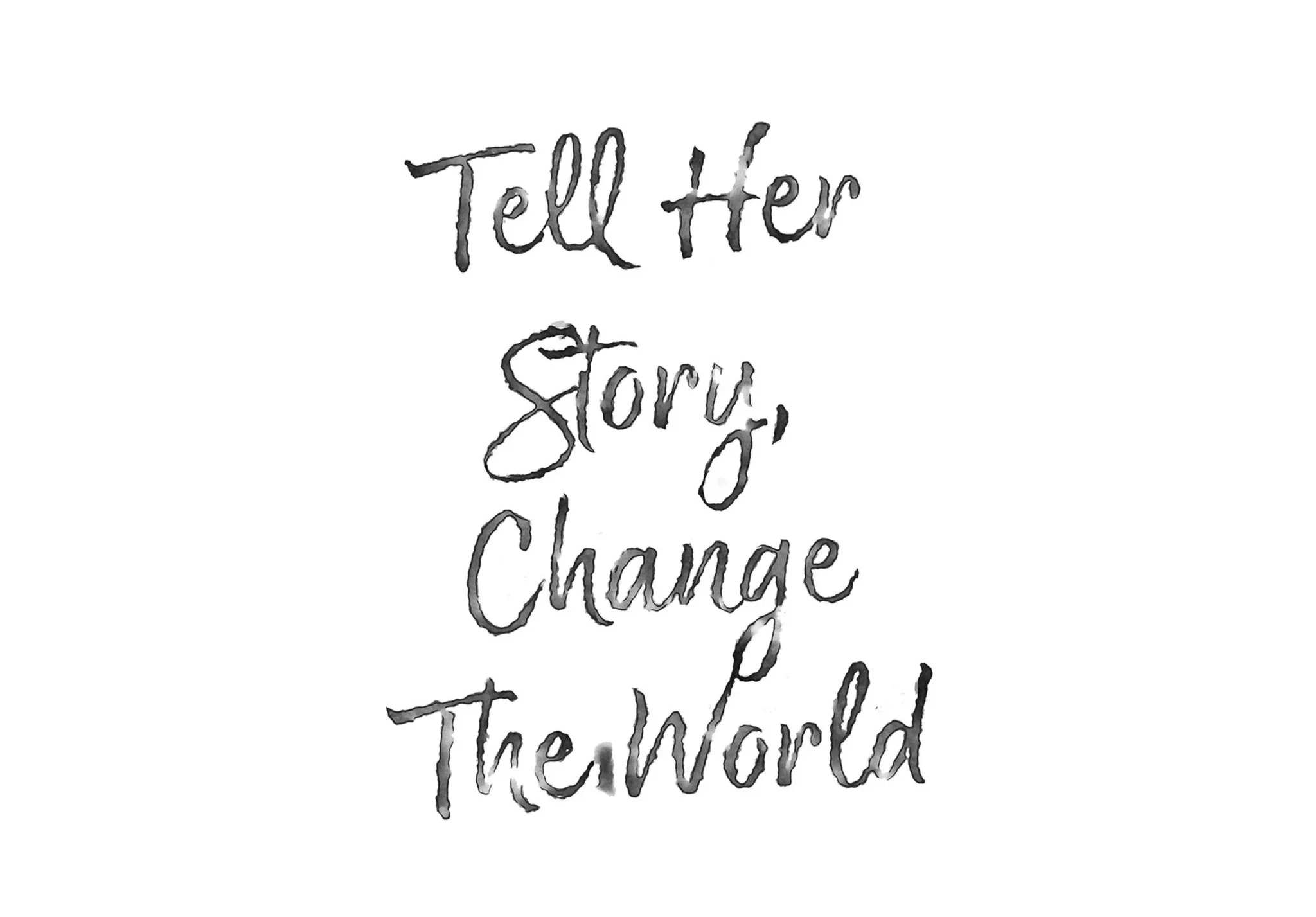
It’s fitting that Independent Women’s motto is, “Tell Her Story, Change the World.”