Dana Perino Tells Young Women to Take Risks and Leave Room for Romance
Written by Emma Foley
Photography by Bethany Miller
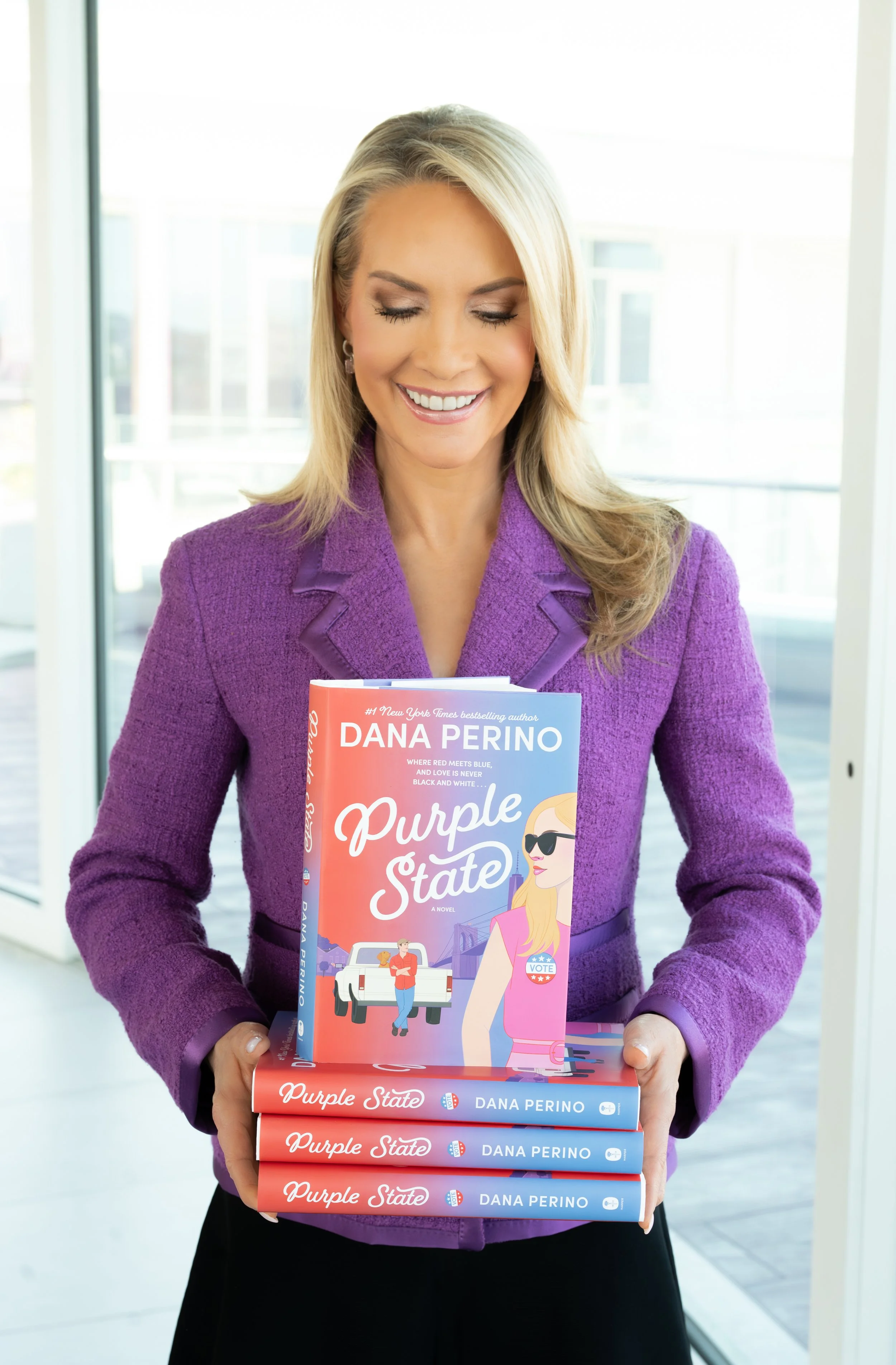
Perino in Washington, DC, May 1, 2026 | Photo by Bethany Miller
In April 1979, first-grader Dana Perino published her very first novel. Sort of.
Only one copy exists: a slim manuscript wrapped in a fabric book cover splattered with cartoon carrots.
In the story, titled If I Were…, almost-six-year-old narrator Perino imagines herself as a pig, a hippo, a witch, and an owl, walking readers through a series of whimsical hypotheticals with the kind of earnest creativity that leads parents to tuck such things away like artifacts. Little Dana vowed that one day, when she grew up, she was going to write books.
Like her knack for writing stories, her enthusiasm for reading was too awakened by her first grade teacher at Ellis Elementary School in Denver, Colorado, Mrs. Joan Rittenbaum. Nancy Drew, Little House on the Prairie, and anything by Beverly Cleary or Judy Blume—Little Dana read every single one. “And I loved it,” she shared in an exclusive conversation with The Conservateur.
The habit never left her, 47 years later. Throughout the conversation, Dana Perino wove in favorite titles: Hamnet by Maggie O’Farrell, Go As a River by Shelley Read, and The People We Meet on Vacation by Emily Henry. She is someone fundamentally shaped by reading.
It was that voracious love of fiction—planted in the first grade and cultivated over decades—that eventually led Perino to come up with the concept behind her debut novel, Purple State. Putting the concept into words on a page came with a little help from a seasoned author.
Dana Perino had come across Raft of Stars by Andrew Graff, a work she called “fabulous,” and, having enjoyed it so much, she invited Graff to participate in a book signing at her friend’s store, The Little Point Book Shop, in Point Pleasant Beach, New Jersey.
Perino had not yet begun working on Purple State, but one encounter with Graff sent her to finally embark.
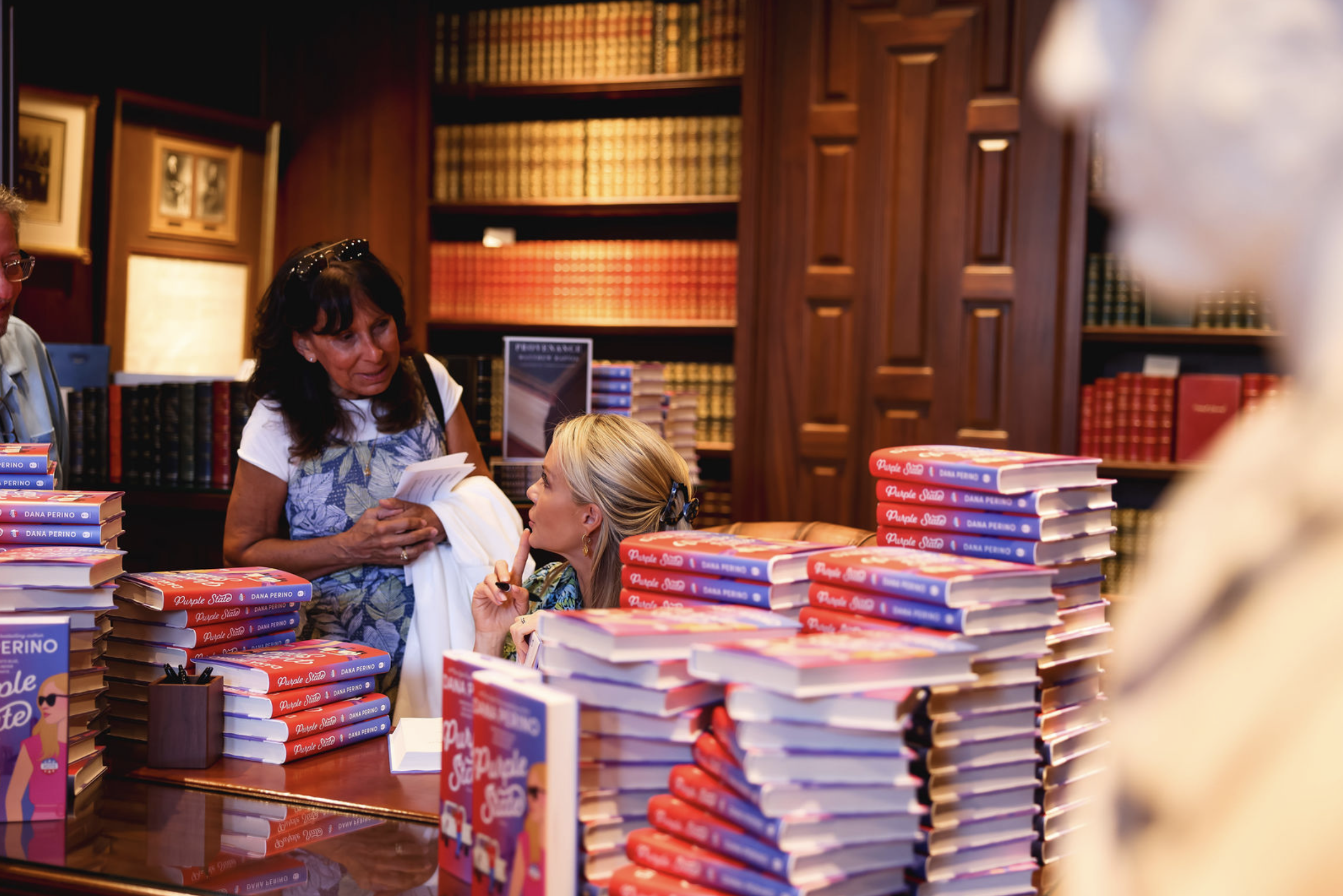
Perino at Raptis Rare Books, Palm Beach, FL, April 17, 2026 | Evelyn Paniagua of Bella Eve Photography
“So it all comes down to one gerrymandered district in Wisconsin!” he explained, just steps into a three-mile walk along the beach. It was at that moment Perino felt the endeavor possible; the jagged bits of narrative suddenly clicked into place. She set aside every weekend for about two years, sat down, and wrote. The time would fly by.
She created the characters from scratch, but, soon, they began to feel real to her—reflections of different parts of herself.
“Dot certainly has my trajectory and things that I went through,” Perino recalled her time working in public relations. “Fashion-wise, she’s kind of a mess—classy, but not matching.”
Dot finds herself stuck in Manhattan, drifting through the fog of a quarter-life crisis: a stagnant relationship, an ever-emptier glossy corporate career, and the creeping suspicion that her real life has yet to begin. The DNC knocks with an unexpected opportunity: relocate to a swing district in Wisconsin for a year ahead of the presidential election to help organize voters on the ground.
Fresh off a breakup with her lackluster boyfriend and desperate for something that feels bigger than herself, Dot decides to take the leap. She convinces her two best friends, Mary and Harper, to join her on an adventure to the Midwest.
“Mary has the confidence and the style and the swagger I wish I had,” Perino admitted. “I would love to be more like her.” A Staten Island native and hot-shot lawyer, Mary manages to secure approval from her firm to work remotely for the year.
Then there’s Harper, the softest and most introspective of the three, who arrives in Wisconsin hoping the distance from a toxic teaching gig at a Manhattan private school might finally help her write her first book.
“Harper is the reader,” Perino explained. “She’s Brooklyn. She’s vulnerable. She’s cute. She’s funny. She’s trying to figure everything out. Actually, every guy who’s read it—Peter, Andrew Graff, Jon Glenn, Jay Wallace—likes Harper the best.” She added, “Who knows? Maybe they want to save her.”
“I wish they were real,” Perino confessed of her trio. “I think about those girls all the time—and what’s next for them.”
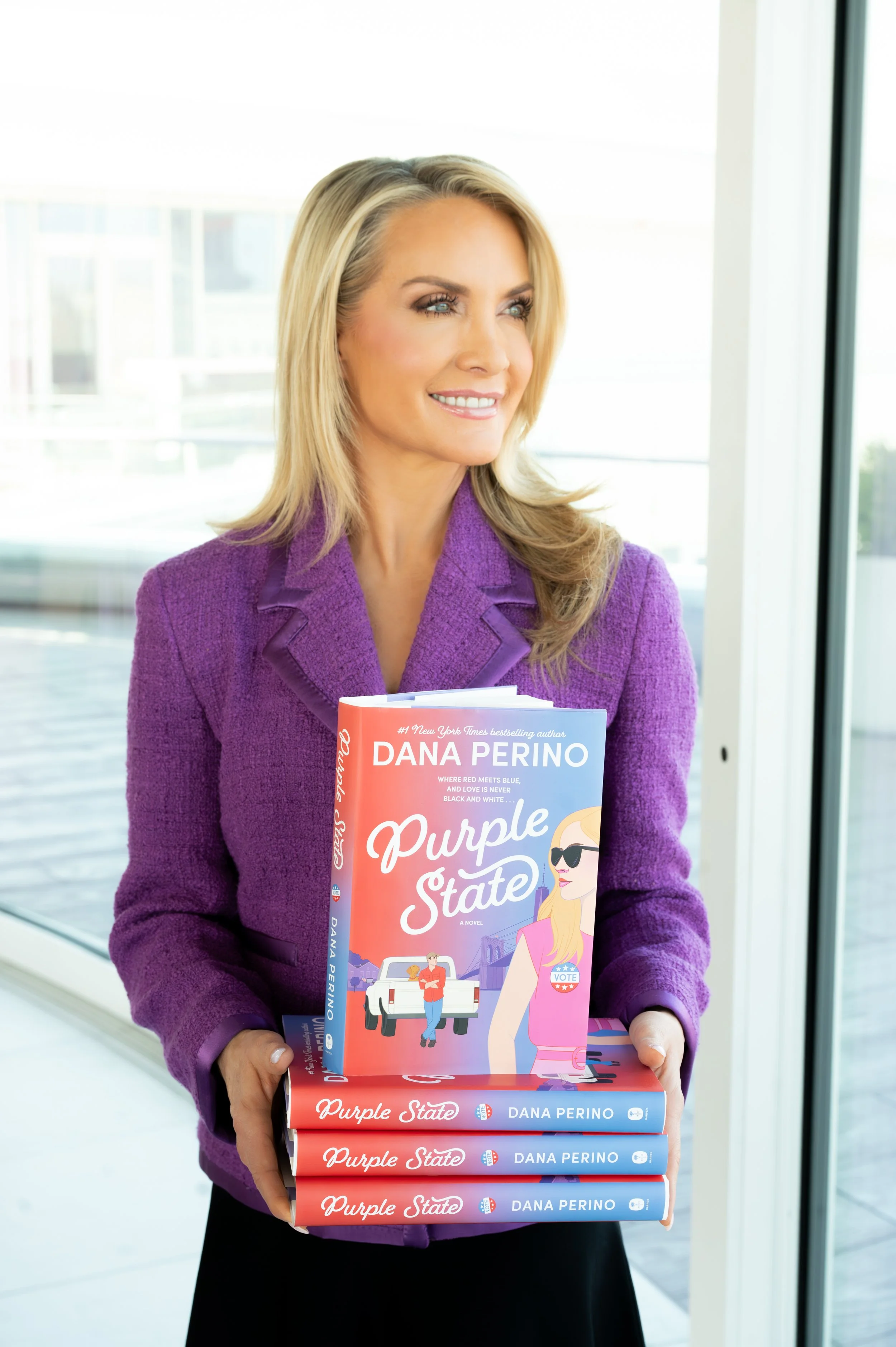
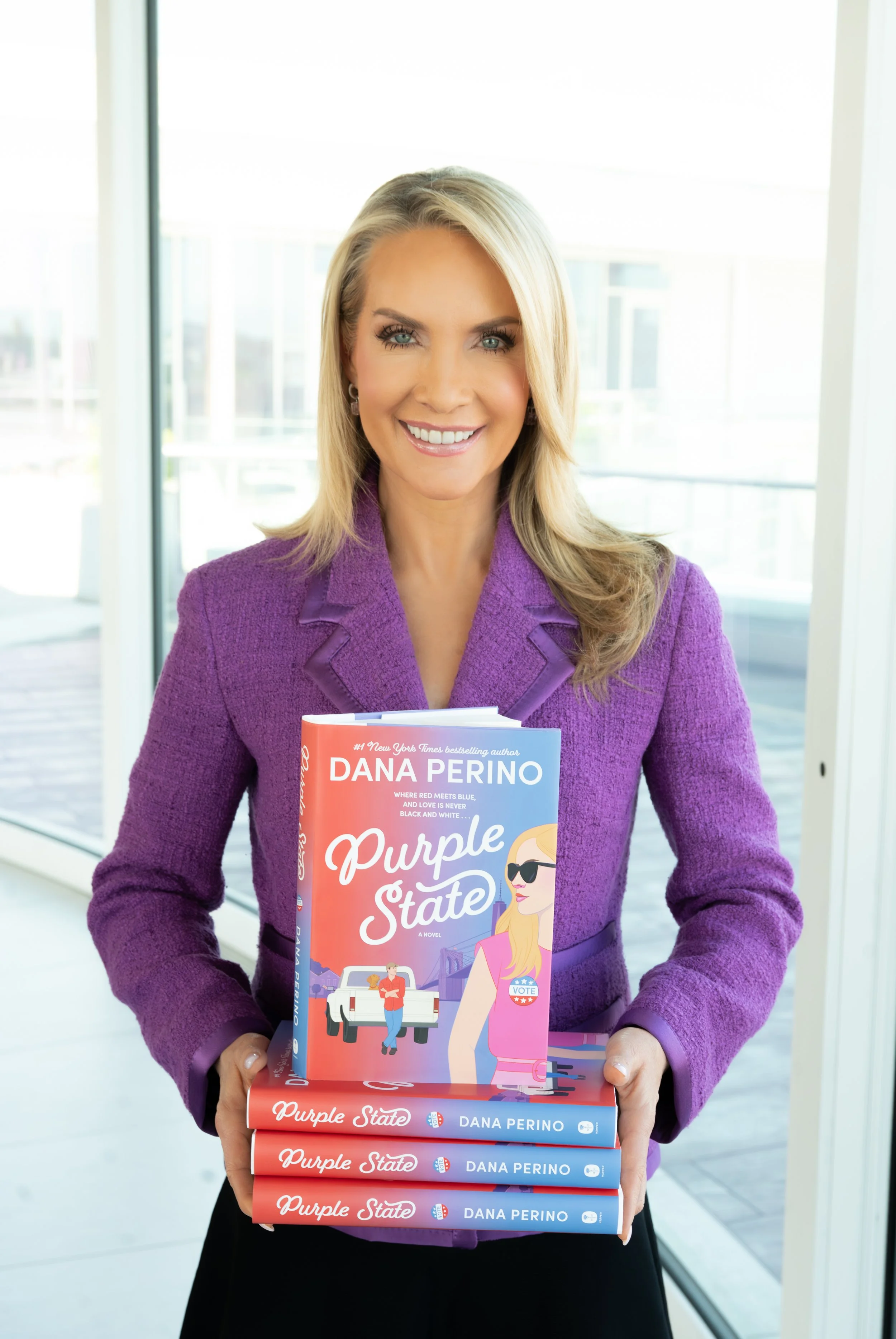
As it turns out, Perino already knows. She revealed that their next chapter is already in the works.
Perhaps surprisingly for a former Republican White House Press Secretary and a Fox News anchor, all three protagonists are Democrats. But they had to be. They are the vehicle for the larger parable Perino set out to write: the infusion of tribal politics into modern dating culture has left many young women lonely.
In 2020, the American Enterprise Institute released data showing 63 percent of Americans would refuse to date across the aisle. Among Democratic women, a stunning 79 percent would see a man’s conservative leaning as an automatic dealbreaker.
This aches Perino, who sees among the young women she mentors another the rampant belief—that choosing love requires one to pack it all up professionally. She has made a vocation to indefatigably relay a message that the leap is worth it.
“You only get one of these,” she put simply, meaning life.
She speaks from experience, having upended her career and life in America as she knew it to answer a call for love across the pond, in England, to a man 18 years her senior, who she met on an airplane. Almost three decades later, Perino has become living proof that love and ambition need not exist in opposition.
When asked whether her husband, Peter, had read Purple State before publication, Perino didn’t hesitate.
“Every draft.”

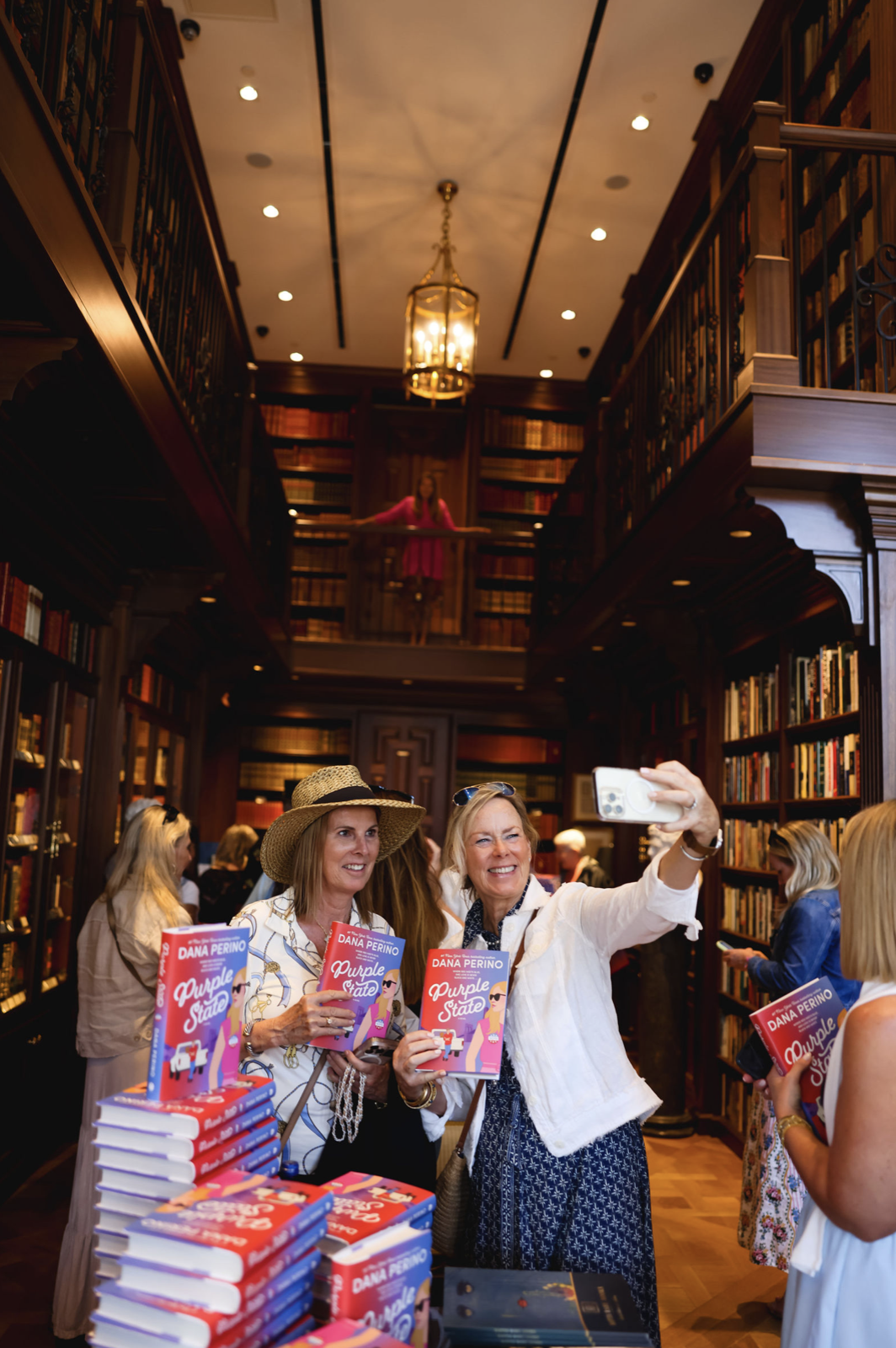
In Purple State, Perino gives each of her girls their own serendipitous love story, each defying their “plans,” each an antidote to their conditioned inclination toward the insipid cosmopolitan partnership.
“Women are looking for romance,” Dana explained. “That hasn’t gone away.”
Beneath the rom and the com, Purple State is a love letter to the American small town. Cedar Falls, Perino explained, is a real place, called Cedarburg. Notoriously politically purple, the town swung toward President Trump in the 2016 presidential election by nine percent. In 2020, President Biden won by just 19 votes.
As Dot, Mary, and Harper settle into the rhythms of small-town life in Cedar Falls, they discover something near-extinct in their coastal metropolis. Residents celebrate each other’s joy and share each other’s tragedy. They know their neighbors. And, most importantly, the individual is not merely a representative of his or her political affiliation.
Beyond the lighthearted charm of Purple State, including its slew of clever small-business names, some borrowed from real life, runs a more serious undercurrent.
“Rural America is under pressure,” Perino said.
Perino brought up the Foxconn controversy in Wisconsin, where families were pushed off homes and farmland through eminent domain under promises of economic revival tied to a massive manufacturing project that never fully materialized.
Having grown up in Colorado and Wyoming, Perino views the family farm as “sacrosanct.” Covering the issue as it played out in the news cycle struck her so deeply that she wove it into Purple State: one Cedar Falls family faces the possibility of losing their farm to eminent domain. Communities built over generations are being asked to trade permanence and rootedness for “progress.”
Years immersed in the news cycle brought Perino face-to-face with mothers who lost children to fentanyl, victims of violent crime, and people trying to rebuild some semblance of their lives after devastating loss.

Photo by Evelyn Paniagua of Bella Eve Photography
Reading, she believes, helped deepen her understanding of the human condition.
“I believe that reading a lot of different fiction has helped me understand people even more,” Perino said. “I’ve learned a lot about humanity through reading, and I hope people here do, too.”
This attentiveness to salt-of-the-earth American shaped even the novel’s seemingly peripheral characters.
“The book was getting a little long for my editor’s taste,” Perino explained. “A couple of times, he tried to cut Albert, the doorman, out. And I said, ‘No, he has to stay, because every young woman who lives in New York—her dream is to live in a doorman building and have that guy be the one they can go to with anything.’”
Her instinct to insist Albert stays preaches her debut novel’s deeper thesis: to preserve the causal, yet close, human relationships that take life from tepid to warm.
And, perhaps, Perino’s biggest lesson in Purple State? “I want people to wear politics lightly because it’s holding them back from enjoying their lives.”
Coming from someone who has broken glass ceilings in politics and records in conservative commentary, the message is one to which all Americans, especially young women, should listen.
“When I finished it, I felt a level of professional accomplishment that I hadn’t really felt since I was named White House Press Secretary. I hope I hit the mark.” (Spoiler alert: she did.)
The moment she finished writing Purple State, after typing the non-obligatory words “The End,” Dana Perino looked up the whereabouts of her first-grade teacher, Mrs. Joan Rittenbaum. “She spotted me as a reader and gave me a lifelong passion that meant so much to me,” Perino included in Purple State’s acknowledgments.
Sadly, Perino would never have the chance to express her gratitude personally. She learned that Mrs. Rittenbaum passed on in 2008. And so, beyond the many lessons woven effortlessly throughout Purple State, Perino leaves readers with one final, straightforward piece of advice:
“Thank your teachers now.”
Emma Foley is the Media Relations Coordinator at the Network of Enlightened Women. She has held roles in digital media production at National Review and the Howie Carr Radio Network. Originally from Pennsylvania and a graduate of the Boston College Carroll School of Management, Emma is based in New York City.
Bethany Miller is Managing Editor of The Conservateur, a fellow at Concerned Women for America, Director of Communications at NRB, and owner of Bethany Miller Photography. She serves as a consultant for numerous political campaigns, governmental/military agencies, advocacy organizations, and ministries. Her written and visual work delivers classy conservative commentary on the conversations of our time. You can find her on Instagram and X @bethanyymmiller.