Heaven Before Harvard: Rachel Campos-Duffy on What Comes First
By Isabelle Redfield
Photography by Harrison Koeppel
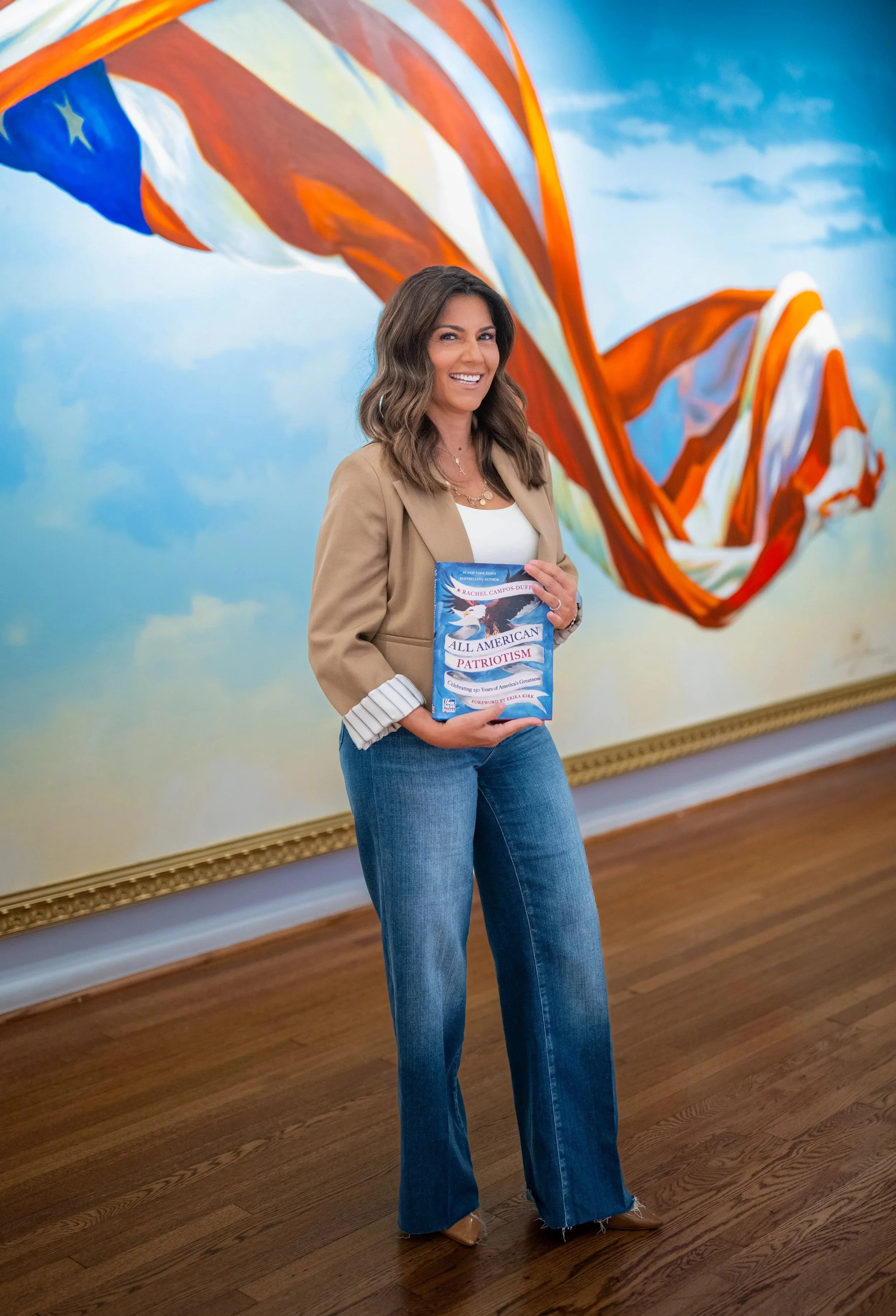
There is no green room that quite prepares you for Rachel Campos-Duffy. Yes, she was made for television, but studio lights merely illuminate a conviction already bright within her. She has wrestled with the questions long before the cameras roll; by the time she sits across from you, she is simply telling you where she landed.
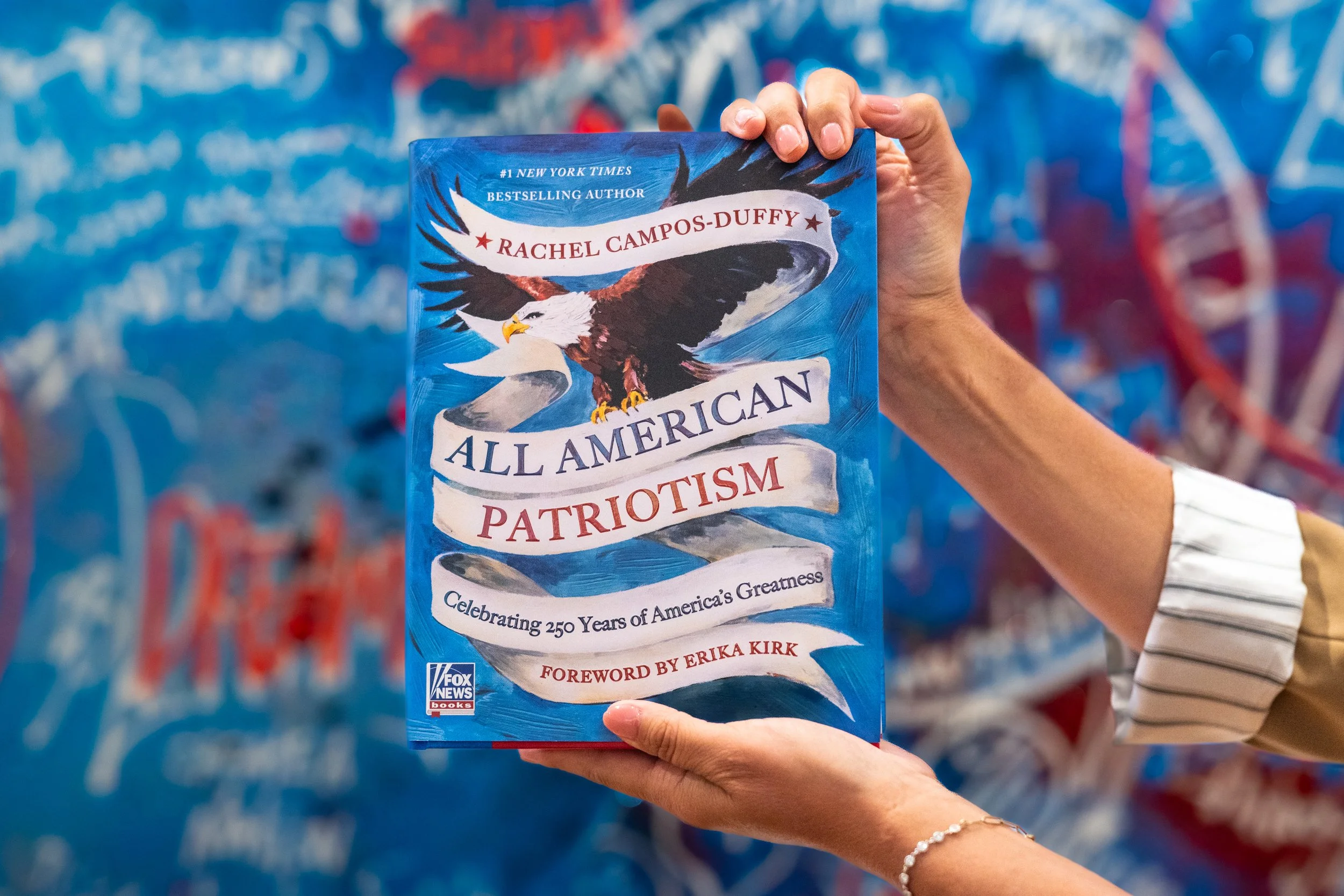
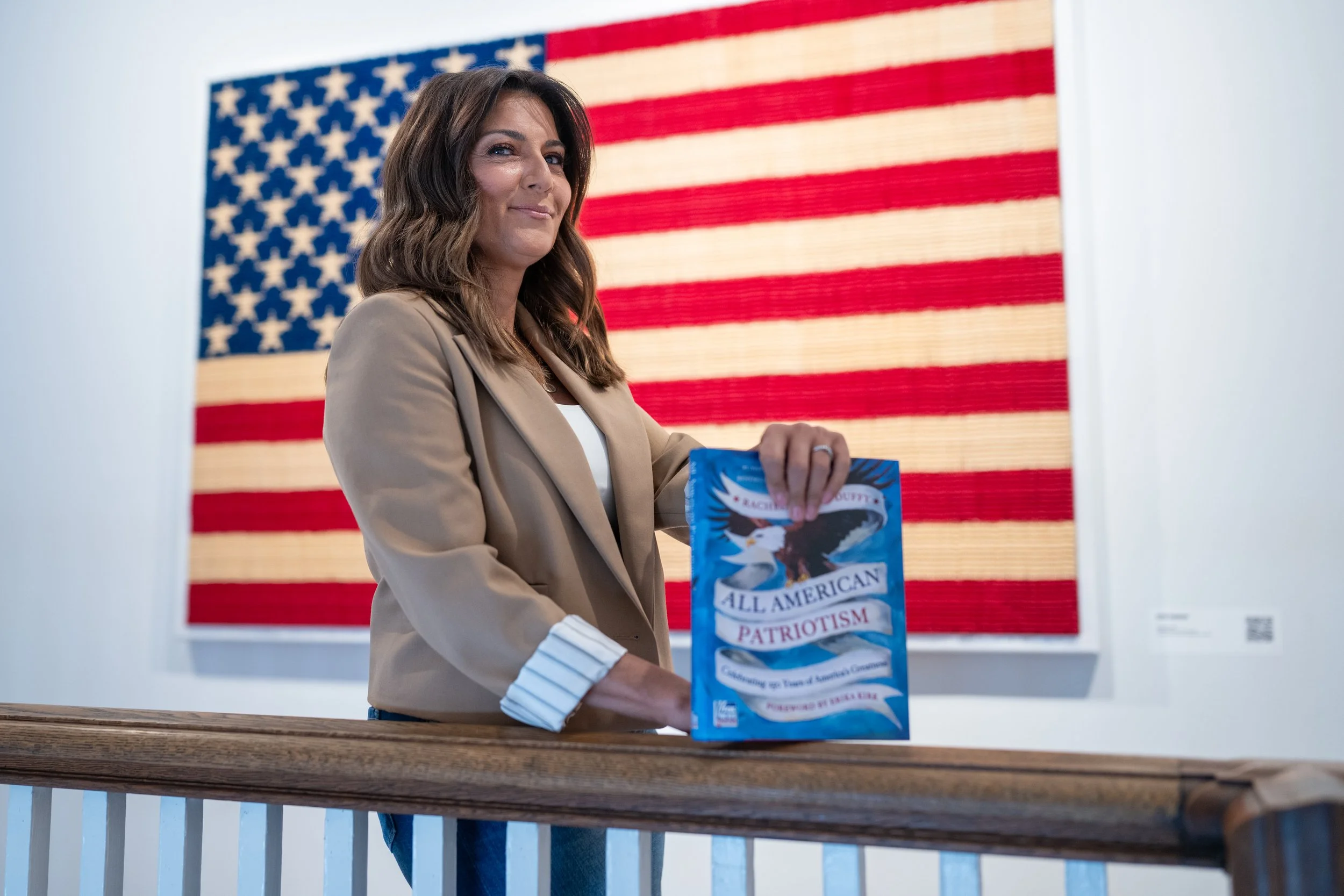
Where she landed is now a book. All American Patriotism, her second collaboration with Fox News Books after An All American Christmas, arrives for the country’s 250th birthday with a foreword from Erika Kirk and chapters from across the Fox family: Sean Duffy, her husband and the 20th secretary of transportation; their eldest daughter, Evita; and colleagues she chose as much for geography as for wattage. She wanted the nation’s regions to compete a little, the way they do in real life.
Rachel and I met on a bright summer morning at my house in Washington, D.C., in a front room that borrows Ralph Lauren’s eye for design: flags and polo ponies, deep navy against Navajo-inspired textiles, a dash of animal print. We eased into conversation over the patriotism on display around us. It felt like the right season for this book, and for Fox News, which celebrates its thirtieth anniversary this October.
“One of the things I love about America is how regional we are,” Rachel told me, turning my makeshift latte between her hands. “As much as Starbucks is trying, we’re still not homogenized. We still have our distinct culture wherever we are from. I wanted to capture that in the book, and I really do believe that goal was fully accomplished.” She ticked through the evidence the way a mother of nine reads a report card. “If you read Ainsley Earhardt’s chapter, you feel like you get what South Carolina’s about. You read Will Cain’s chapter and it’s so Texas. You read Tomi Lahren’s chapter and it’s so South Dakota—the ranching and the Badlands.”
She returned to mass-market espresso to make the point: what she calls the “Starbucksization” of the country, “that you can be here and the Starbucks looks the same in Madrid as it does in America.”Her fix is not nostalgia so much as architecture—literal architecture. “We need to get back to classical, colonial, federalist American architecture. Embrace it, love it.” What she wants from a building is what she wants from a family and a country: something you can recognize as unmistakably itself.
That instinct is the engine of the book’s real argument. For all its Americana, it is less interested in patriotic display than in preserving the things that make a country worth loving.
“What you also get from the book is nostalgia, but not in a syrupy way,” she went on. “There was a time when everybody took for granted that you just loved this country. You loved America, and then you worked through her flaws through the prism of that love.”
She has watched, over two decades of raising nine children, what happens when that order is reversed. “If my little kids were raised only hearing about our flaws and our problems and our shortcomings since they were in kindergarten all the way through college, it would be very hard for them to love us. There’s a reason why children have that innocence and look up and idealize their parents. They should.”
For years Rachel has warned that Howard Zinn’s A People’s History of the United States still shapes how too many American children learn the country’s story—not as a flawed but extraordinary experiment in liberty, but, rather, as a long ledger of oppression. She even found that framing in a Catholic school her kids attended, which is why she talks about it the way other parents talk about a leak in the roof: as a crisis already inside the house. “That is why a patriotic curriculum is important,” she said. “That is why we need to return to this.”
The story she tells best is about her parents, and she tells it the way people tell the stories that made them—many of which are on full display in All American Patriotism.
Her father, Miguel Campos, grew up in the copper-mining town of Sonora, Arizona, the eleventh of fifteen children. One of his earliest memories is from the kindergarten playground, where a classmate pulled down his pants and everyone saw what his family couldn’t afford: underwear. What the Camposes lacked in money, they made up for in work. He shined shoes, sold cactus leaves door to door, and by twelve was running a small piñata business. He enlisted in the Air Force, served thirty-three years, and retired as a chief master sergeant. Then he went back to school, took night classes, earned his degree, and became a teacher.
Her mother’s version of the same climb happened in another language. Maria del Pilar immigrated from Spain, earned her GED while Rachel was still in kindergarten, and years later would enroll at Arizona State—as a freshman—the same semester Rachel was a sophomore. “At the time I was mortified,” Rachel said. “But as I got older I began to say, ‘She is the bravest woman I know.’ It must have been so intimidating, doing it in a different language than her own.” She let that sit. Then she landed it. “They lived the American dream. Why wouldn’t they love this country?”
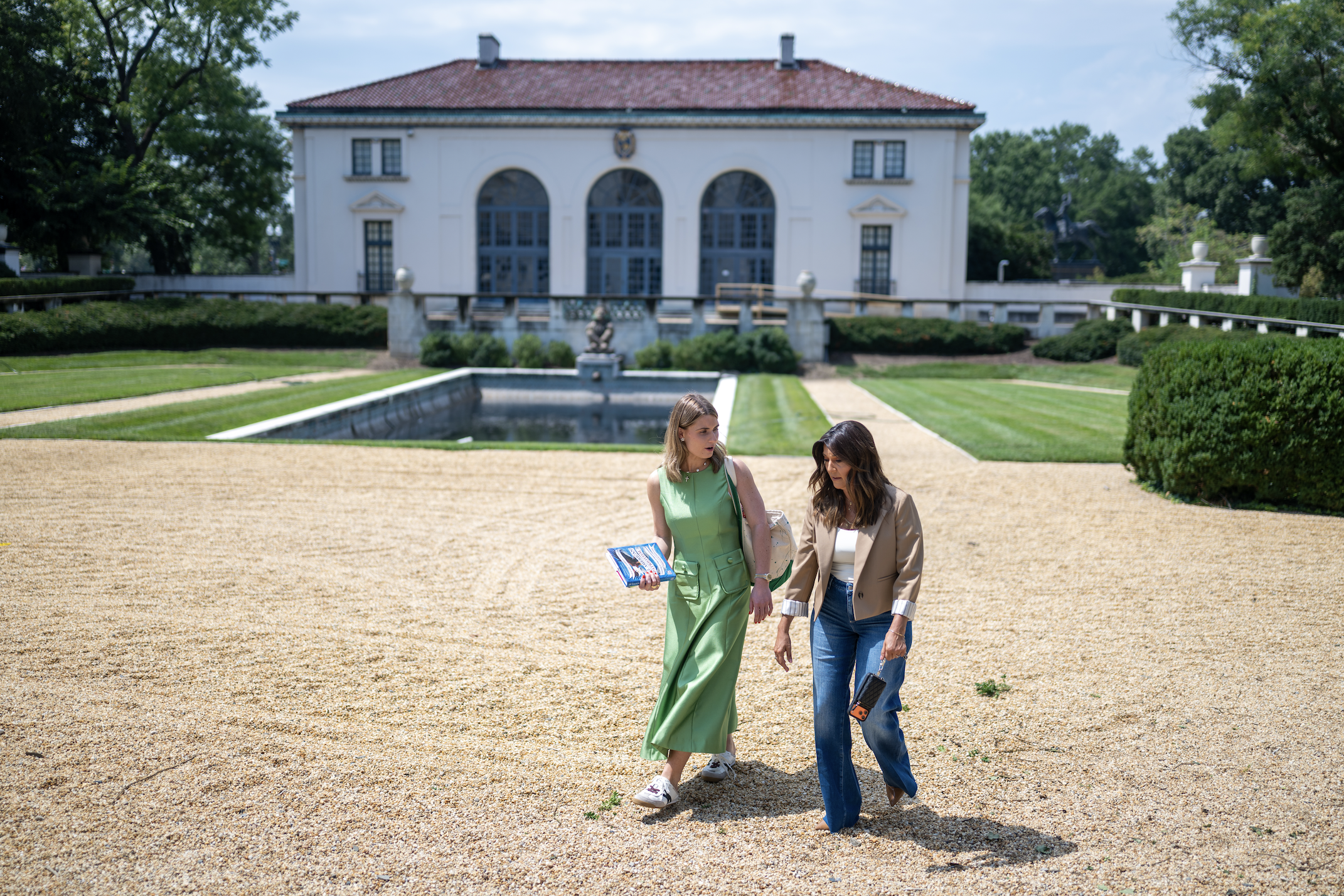
Days after our initial sit-down, Rachel texted that she was in town and asked me to join her for a stroll. We met in Georgetown at a moment’s notice, three of her daughters in tow, equal parts polite and wiser than their years, and for the afternoon the interview stopped being an interview. I just went along for the ride: down flag-draped cobblestone streets, into a local coffee shop, and on to a coveted favorite, Ella-Rue. As we walked, I was turning over a decision of my own.
Instead of advice, she gave me an assignment: sit in church—alone—and ask God for His answer before looking for anyone else’s, hers included. Weeks later, while watching an episode of the family’s new Great American Road Trip series, I recognized the instruction. It matched the one she had given her daughter Paloma, who was herself wrestling with the college admissions process. Different questions. Different stages of life. Same order: Be still. Ask God.
That is the architecture of her faith, scaled to whatever room you happen to be standing in. “This is a Christian country,” she began. “The reason we’re unique is because of one thing: we believe our rights come from God. It didn’t come from a king. It doesn’t come from the state. It comes from God. If you lose your Christian roots, you actually lose the underpinnings of this entire experiment.” She talks about her own home in the same terms. “Christianity, my Catholic faith, and tradition are basically my purpose for living. They are the reason why I’m married twenty-six years—and why I have so many kids.”
Marriage, to her, was never a partnership of two. “It’s a three-person arrangement between me, Sean, and God,” she said. “How am I going to break that promise with God?”
And the parenting line that has become her signature this year—repeated often enough that Secretary Duffy has started using it himself—is the one that makes the rest of the house make sense. “My job isn’t to get you into Harvard; it’s to get you into heaven. That’s it.” She nodded. “And if you can look at every parenting decision through that prism—” She let the sentence trail off. The rest was understood.
There is a mission statement in her kitchen. The actual kind. Not Lenten promises taped to the back of a door, and not a workout regimen printed off the internet. The kind a company writes. “A company has a mission statement,” she said, almost daring you to disagree. “Why wouldn’t a family, when a family is way more important than a corporation?”
Rachel is not precious about how hard the years have been. When Sean first ran for Congress she was pregnant with their sixth child, and what followed was nearly a decade in which he was in Washington more than he was home. “The wheels were falling off the bus,” she said plainly. “We needed to get this family back on track.” Valentina, her ninth, born with Down syndrome, arrived in the middle of that reckoning. Rachel calls her, without hesitation, the wake-up call the family needed. Valentina is the glitter and the glue.
It feels strange to write that Rachel is a grandmother. She seems rather ageless. But she has two granddaughters now: Lourdes, Jack and Kaylinn’s daughter, born in 2024; and Rosita, Evita and Michael Alfonso’s daughter, who arrived only weeks before we first sat down. Becoming a grandmother, she said, felt like the circle closing. “I’ve never seen my daughter happier.” She watched one of her youngest hold Rosita and say, beaming, “I want one.”
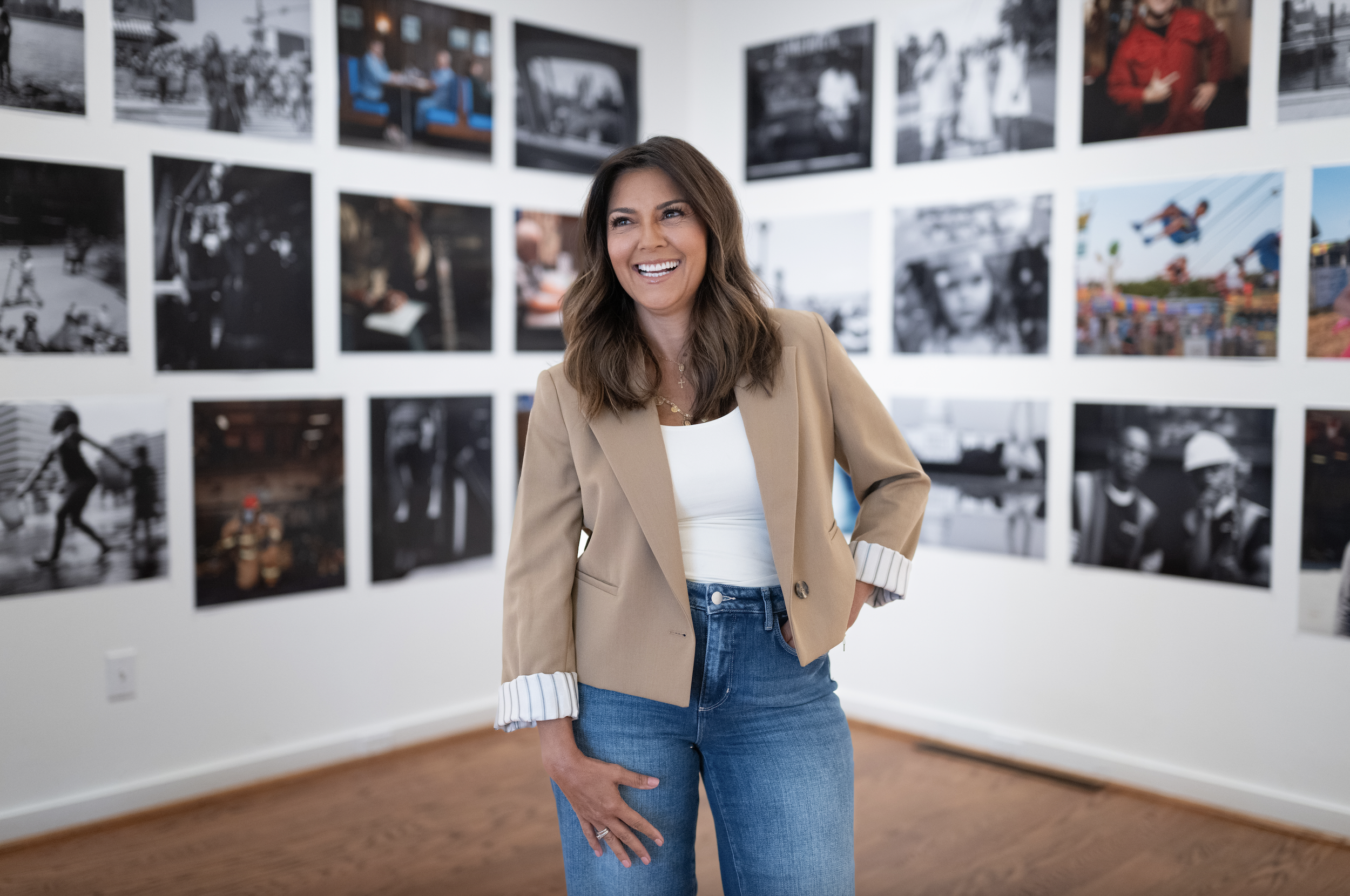
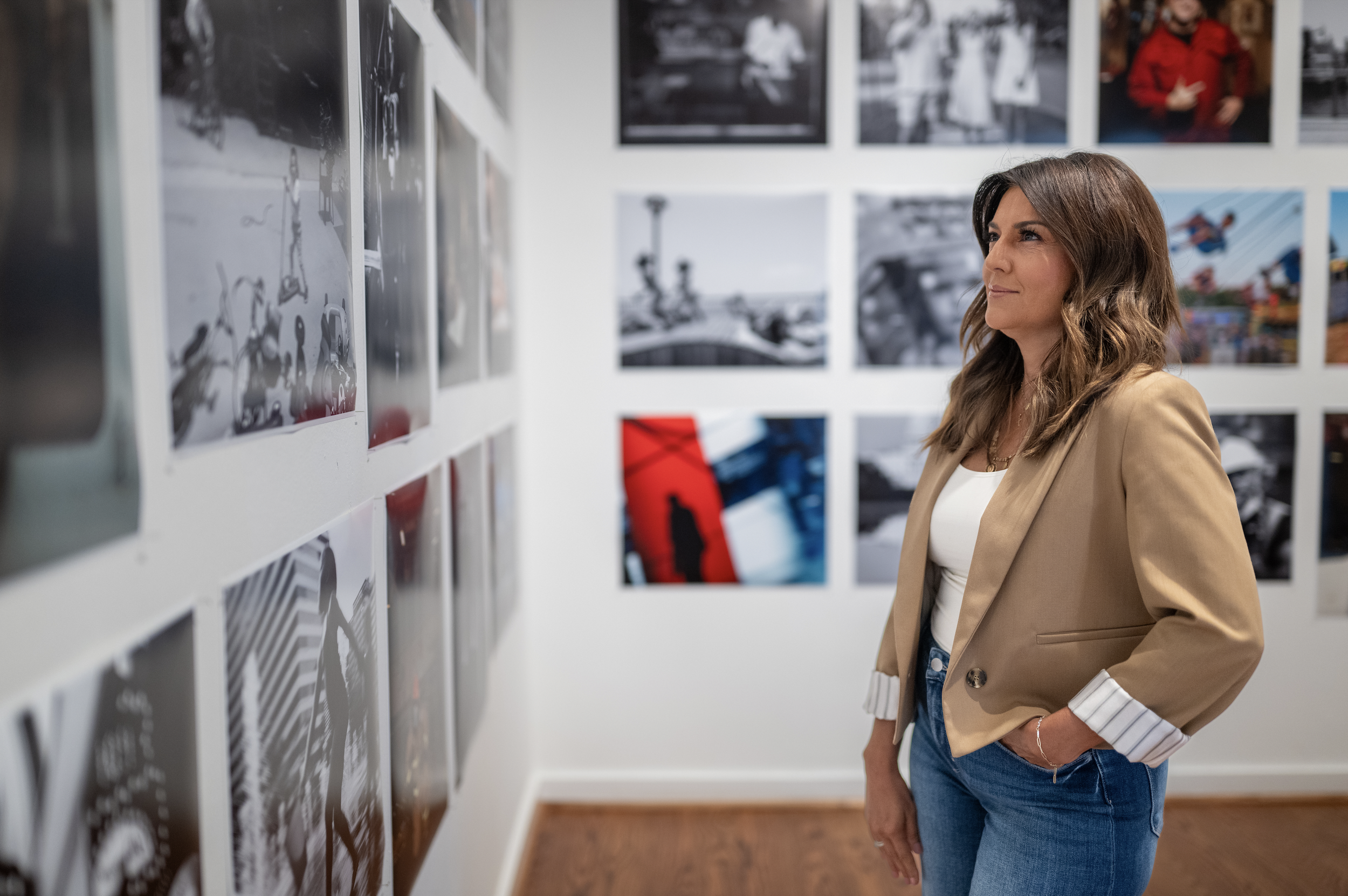
By the time the cameras arrived, weeks later, Rachel had already said most of what she came to say. We photographed her at the Art Museum of the Americas, in front of Erin Elmore Scavino’s Passport to Patriotism: 250 Years of Diplomacy—an exhibit curated, like the book, around the semiquincentennial. Scavino, who graciously arranged the visit, had spent the season making a visual argument for what American diplomacy has looked like across two and a half centuries. Rachel and the Fox News family had spent it making the same argument in essay form.
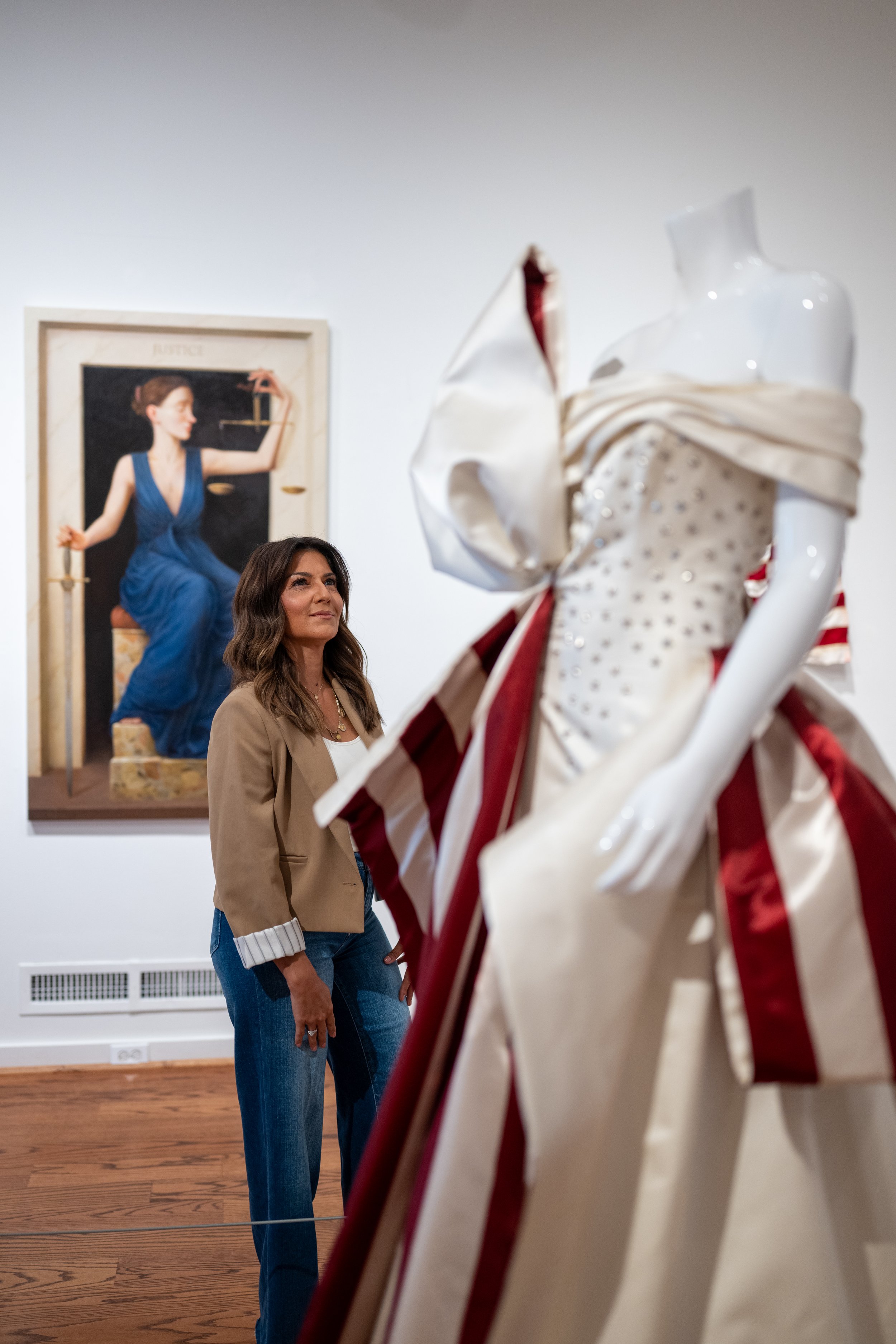
It was there, between shots, that she turned toward the daughters she is not related to—the ones watching from the other side of a screen or a bookstore shelf. She loves Gen Z in a way that sounds almost like relief. “I think they are hands down the most interesting, open-minded, no-BS generation ever,” she said. “They are questioning everything—in a very Spirit-of-1776 way.” For a woman who talks about returning to the past, she is remarkably plugged into the present. Her own children make sure of that.
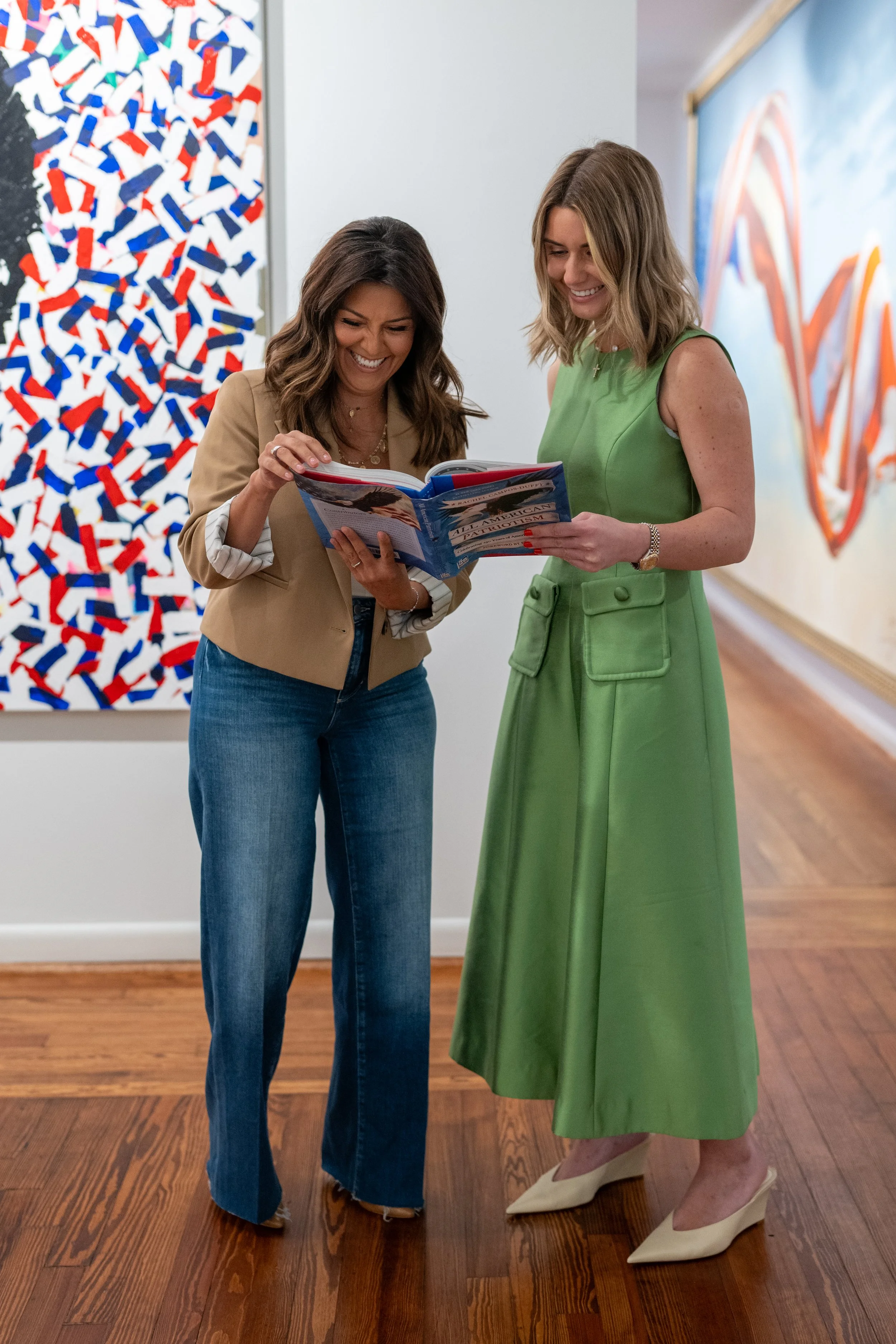
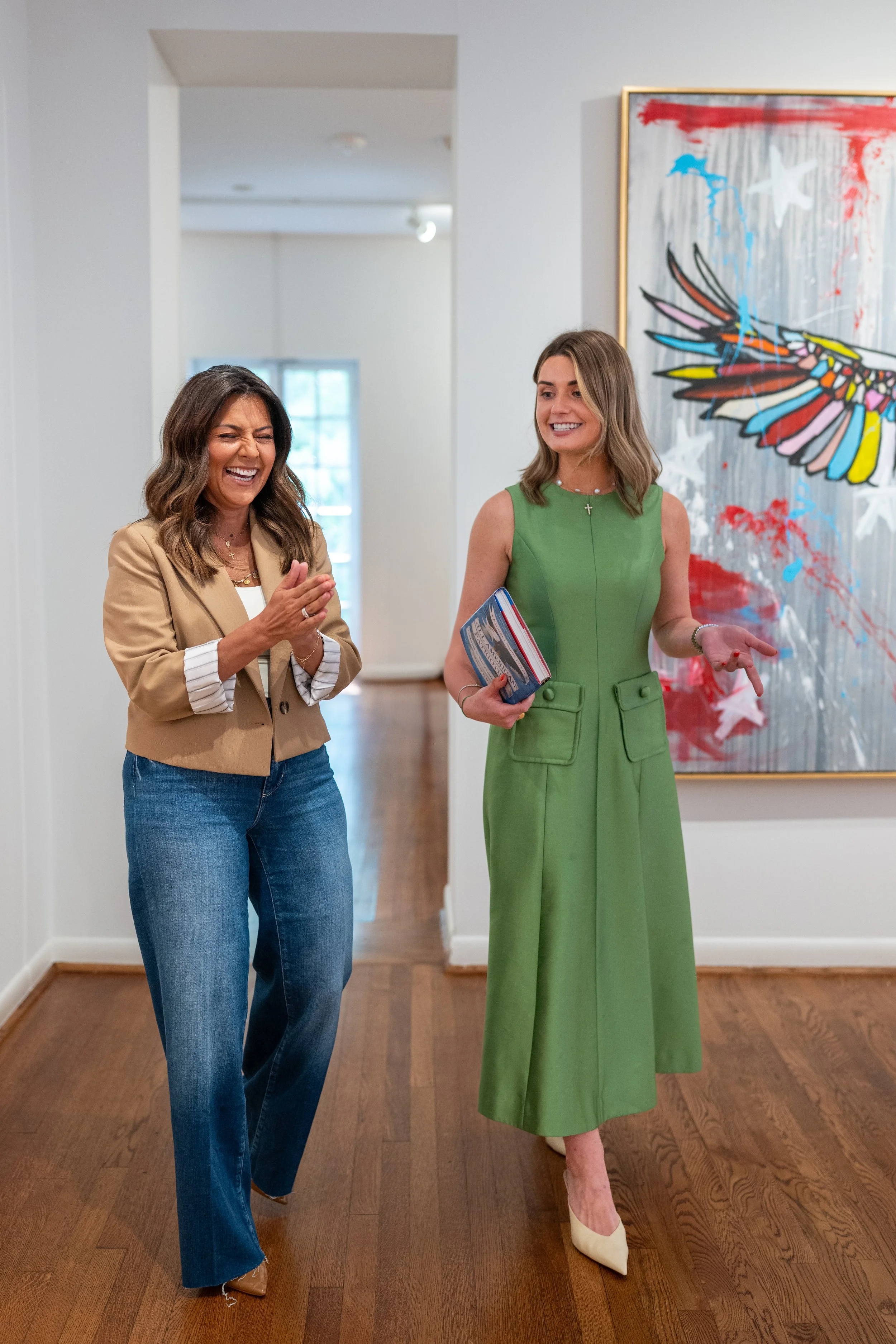
Rachel’s advice to the young women in that audience, and to Conservateur readers, is simple. “Prioritize your love life. If you get your love life right, everything else will fall into place. If you marry the right guy, he will help you pursue your dreams.”
“We are the ‘go for it’ country,” she added, crediting the line to Will Cain. “In America, it doesn’t matter how crazy the idea is. Your friends, your neighbors, your coworkers will say, ‘That’s amazing. Go for it.’”
Rachel’s version of “go for it” has an order. Ask God first, she would tell you. Get the foundation right. Then go for it.
All American Patriotism, by Rachel Campos-Duffy, is available now wherever books are sold, including Amazon, Barnes & Noble, Walmart, Target, and Fox News Books. Published May 19, 2026, by Fox News Books and Harper Influence, with a foreword by Erika Kirk, it is already a New York Times bestseller.
Isabelle Redfield founded The Conservateur while studying at Southern Methodist University. Her previous political experience includes roles with the United States Senate, Fox News, the Republican National Committee, the Trump Campaign, and the White House. She now resides in Washington, D.C.
Harrison Koeppel is an accomplished photographer with passions for both politics and real estate development. These interests have led him through a career spanning the White House Photo Office, two Trump Campaigns, and Kushner Companies. He currently works at the White House Office of Science and Technology Policy.